Otome dakara
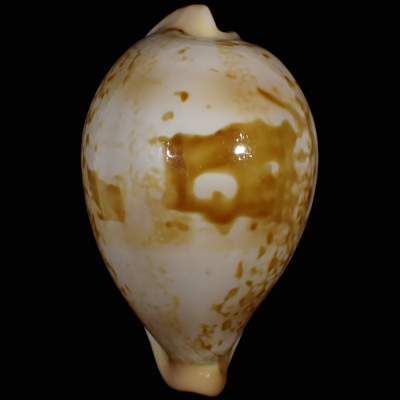
Locality
Australia, Philippines, Taiwan, China.
Japan: Okinawa(figured specimen.), Wakayama.
Original of Japanese name
1915 Yoichiro Hirase, Kai chigusa 3, 42: 203.
Alias
Remarks
Origin of the Japanese name:
Around January 1912, Hirase kai kan(Hirase Shell Museum) undertook the task of
assembling a set of shell specimens from Wakayama Prefecture at the request
of the Kishu Tokugawa family. While Hirase's collection was extensive
regarding rare species, it lacked common shallow-water species. Consequently,
Dr. Tokubei Kuroda visited collectors in Wakayama to conduct a survey of the
shells. One day, after Kuroda had been shown a collector's seashells, he
asked if there was anything else that had been gathered; the collector's
daughter, a girl of seven or eight, had arranged some items in a
confectionary box, following her father's example. The box contained a
variety of beautiful shells likely to delight a young girl, but the cowries
stood out in particular. When Kuroda asked the collector about this, he
explained: "The cowries found in Wakayama all originate in Okinawa, and since
the Okinawan specimens are superior in beauty, I didn't keep them for myself
but gave them all to my daughter."
Among them was an unfamiliar cowrie shell, which Kuroda brought back to Kyoto.
Later, he consulted Mr. Roberts at the Academy of Natural Sciences of
Philadelphia, and it was described as a new species under the scientific name
Cypraea hirasei. Furthermore, when Mr. Hirase was preparing to publish
Kai-Chigusa in 1915, it became necessary to assign a Japanese name to this
cowrie for its illustration. Taking into account the background described
above as well as the fact that the shell resembled the figure of a beautiful
young girl Kuroda named it Otome dakara(young girl's cowry).