|
|
|
|
|
|
|
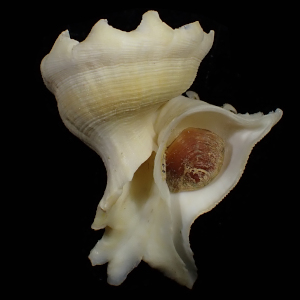
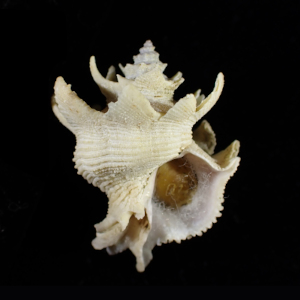
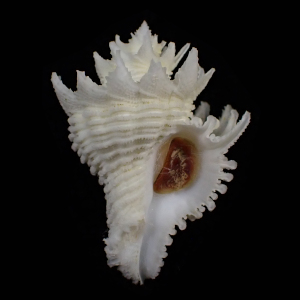
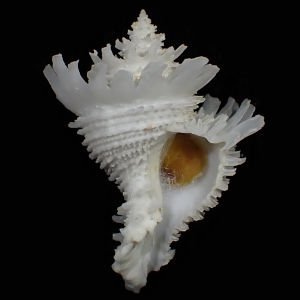
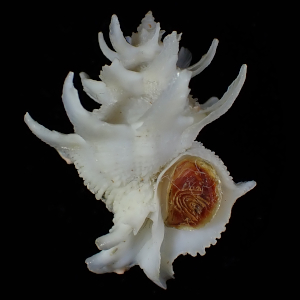
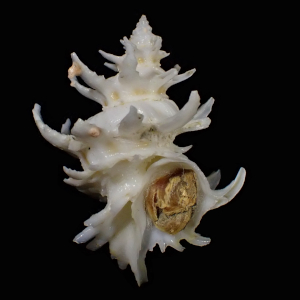
Shape looks like murex, and has an exquisite projection and the sculpture.
Spiral rib of the majority of species is formed with sets of squama thorns.
Ribbon of teeth and board of mandible are lacked. Opaculum is horny, and has
the nucleus on the outside. Some species are related to Phylum Cnidarian.
For instance, Scleractinia, Zoanthus, and Gorgonacea, etc. Coralliophilidae
have the habit by which egg capsule is maintained in the mother's womb until the
period of berijar infant life.
There are more than 60 species of Coralliophilidae in Japan. There are a lot of synonym because the change in shape is large even if it is same species. This family can be classified into Coralliophila which lives in shallow water (0-20m in the depth) and Latiaxis which lives in deep water(50-200m in the depth). A phased change is seen by the dependancy to the host in shallow water species. The mode of life of deep water species are uncertain. (Sekai Bunka Sha Ketteiban Seibutu Daizukan Kairui) Latiaxis with a beautiful thorn and the sculpture is popular among collector. However, obtaining was difficult from old times because many species lived in the deep water. Latiaxis mawae, Babelomurex deburghiae, B. japonicus, B. lischkeanus, etc. were known in Japan where the fishery technology developed since the Edo age(1603-1867). And, these at that time were valued highly among the Japanese collector. On the other hand, "Coralliophila" and "Magirus" might be carried to the coast by the wave, and seem that people of old times were able also to find them. However, after the 19th century, the scientific name was put as for most shelles because these kind of shelles did not turn to for food, and were not collected. It has seemed that B. lischkeanus and B. japonicus live only in a sea Japanese peripheral since old times. However, the range of distribution has expanded along with pioneering a new fishery. Moreover, because some new fishing method (for instance, "Coral net of Taiwanese Japan-neighboring waters which became opening after the Meiji age." and "Tangle nets of the Philippines which started in 1970's." ) were suitable for catching the shells which lived in the rockey bottom in a deep water, a lot of new species of Coralliophilidae were found. Obtaining of the shell which catches by this fishing method is difficult because those coral nets are in the prohibition of fishing period now. On the other hand, we came to be able to obtain the shell in the sea area where obtaining was difficult so far . For instance, a Vietnamese offing, the Africa east shore, and a Brazilian offing, etc. |